If you picture waterfront living as one single lifestyle, Anne Arundel County may surprise you. With more than 533 miles of shoreline and 12 primary watersheds that drain into the Chesapeake Bay, life on the water here can look very different from one community to the next. If you are thinking about buying or selling near the shoreline, this guide will help you understand what daily life, housing, access, and upkeep really look like in Anne Arundel County. Let’s dive in.
Waterfront living spans the whole county
Anne Arundel County is deeply tied to the water. The county highlights boating, fishing, crabbing, water skiing, sailing, and swimming as part of local life, which tells you a lot about how central the shoreline is to the area’s identity.
Waterfront living is also spread across multiple river and bay areas, not just one pocket. County materials point to shoreline communities along the Severn River, South River, Magothy River, Herring Bay, and the Patapsco Tidal area, including places like Herald Harbor, Sherwood Forest, Edgewater, Riva, Gibson Island, Lake Shore, Deale, Churchton, Pasadena, and Riviera Beach.
That range matters if you are searching for a home. It means your version of waterfront living may be tied to a river, a creek, a tidal area, or a bay-facing setting rather than one uniform experience.
Homes near the water often feel more residential
In at least one shoreline-heavy planning area, county documents describe the housing stock as overwhelmingly single-family detached. The Region 6 plan notes that about 97 percent of homes are single-family detached, and outside older historic beach communities, homes are often on larger lots.
That helps explain why many waterfront areas in Anne Arundel County feel more like house-and-yard neighborhoods than dense urban waterfront districts. The county also notes that the limited supply of townhomes and apartments contributes to the waterfront premium.
If you are a buyer, this often means you may be comparing detached homes with very different lot sizes, water access features, and privacy levels. If you are a seller, it also means presentation matters because buyers are often evaluating both the home and the outdoor setting together.
Waterfront lot rules shape the property
Anne Arundel County treats waterfront lots as a distinct category. According to county zoning guidance, a waterfront lot is one that abuts the mean high-water line, or one that abuts HOA or county-owned land that functions as a waterfront lot.
The shoreline side is treated as the front yard. That may sound like a small detail, but it can affect how a home is oriented, landscaped, and used, especially when you start thinking about additions, outdoor living areas, fencing, or changes near the water.
The lifestyle is about access, not just views
A water view is a major draw, but in Anne Arundel County, the lifestyle often goes beyond the view itself. County parks and water-access resources point to canoe and kayak launches, paddle-in camping, fishing, boat ramps, boat rentals, dog beaches, and swimming opportunities.
There are clear local examples of this access. Downs Park includes the Locust Cove Cartop Boat Launch, and Homeport Farm Park includes a cartop water-vessel launch and parking areas.
This is important whether you own directly on the water or not. In many parts of the county, you can still build a water-oriented lifestyle around public access, paddling, boating, or fishing even if your property is not a true waterfront lot.
Some areas are especially boating-oriented
County materials on the Severn River describe Annapolis as a center of recreational boating activity at the mouth of the river. They also note that summer weekends bring heavy water traffic and that waterfront communities along the Severn use the river for swimming and boating.
That tells you something practical about everyday life. In some Anne Arundel County waterfront areas, the pace and feel of the neighborhood can shift with the season, especially when boating activity picks up in warmer months.
Waterfront living is seasonal
One of the most important realities of living near the water is that the experience changes with weather and water conditions. County beach rules state that beaches are under a no-swimming and no-direct-water-contact advisory for at least 48 hours after one-half inch of rainfall.
The county also notes that jellyfish may be present in beach waters. So while summer on the water can be a major lifestyle benefit, it also comes with day-to-day conditions that may affect your plans.
If you are considering a waterfront property, this is worth keeping in mind. The appeal is real, but the lifestyle is often more weather-sensitive than buyers expect at first.
Maintenance is part of the deal
Waterfront ownership in Anne Arundel County comes with more oversight and more upkeep than many inland homes. County guidance explains that the Critical Area includes land within 1,000 feet of tidal waters or tidal wetlands, and the 100-foot buffer closest to the shoreline has stricter limits.
In that area, clearing, grading, vegetation changes, and new structures can require approval. For buyers, that means you should understand the property’s constraints before making plans. For sellers, it means a well-maintained property and clear documentation can help reduce surprises during the transaction.
Shoreline stewardship matters
County guidance encourages waterfront homeowners to care for the shoreline in ways that support long-term stability and water quality. Natural buffers of trees, shrubs, grasses, and aquatic plants can help reduce erosion and filter runoff.
The county also encourages less mowing near the water and less use of fertilizers and pesticides because runoff reaches the Bay quickly. In practice, waterfront ownership often means thinking not just about appearance, but also about how the land functions.
Septic, sewer, and drainage can affect decisions
Some waterfront homes in Anne Arundel County use septic systems, while some communities have converted to public sewer. County guidance notes that the Bay Restoration Septic Fund can help replace conventional septic tanks with nitrogen-reducing units or help fund sewer connections where public sewer is available.
This is one of those details that can shape both cost and convenience over time. When you are evaluating a property, utility setup is not a side issue. It is part of understanding what waterfront living will actually require.
Piers, seawalls, and erosion control are regulated
Many buyers imagine making quick upgrades to maximize a waterfront property. In Anne Arundel County, shoreline structures are regulated more closely than many people realize.
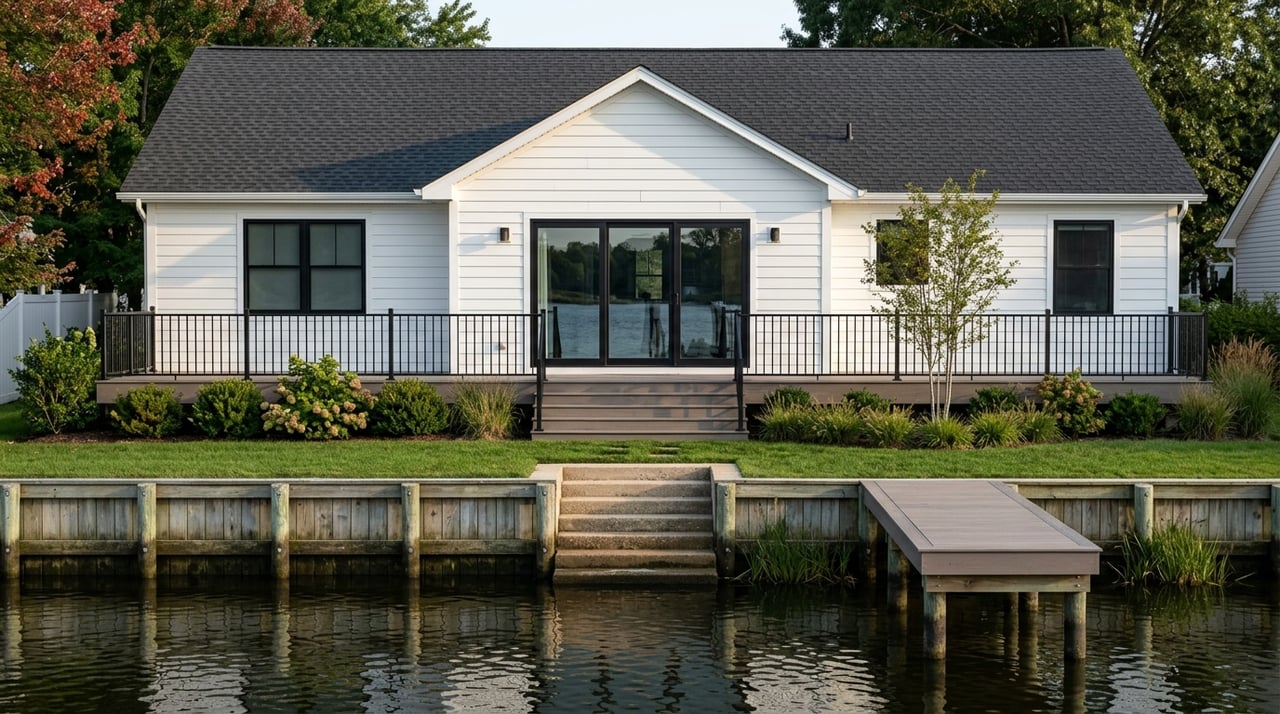
The county states that a building permit is required for installation or alteration of a seawall or riprap revetment used to control beach erosion. County permit guidance also identifies residential piers and residential bulkheads as regulated waterfront structures.
That does not mean improvements are off the table. It means waterfront improvements should be approached with planning, patience, and a clear understanding of county requirements.
Flooding is a real part of the picture
Anne Arundel County identifies flooding as its most common natural hazard. County planning materials also state that shoreline areas are vulnerable to increased flooding from relative sea-level rise, and the county’s nuisance-flooding plan addresses high-tide flooding that creates public inconvenience.
The county’s Severn River materials add another layer to that picture by describing shoreline change as an active process. Tides, currents, waves, and rising sea levels continue to reshape banks and coves over time.
For buyers, this means due diligence matters. For sellers, it means honest preparation and smart positioning are key when bringing a waterfront property to market.
What waterfront living really means here
In Anne Arundel County, waterfront living is best understood as a mix of recreation and stewardship. You may get direct access to the Bay, creeks, or rivers, plus a setting that supports boating, paddling, fishing, and a strong connection to the outdoors.
At the same time, waterfront ownership often includes more maintenance, more permits, more sensitivity to weather, and more attention to drainage, shoreline condition, and property rules. That does not take away from the appeal. It simply means the best waterfront decisions are informed ones.
Whether you are drawn to the Severn, the South River, the Magothy, Herring Bay, or the Patapsco Tidal area, it helps to go in with a clear picture of both the lifestyle and the responsibilities. If you are weighing a move or preparing to sell a waterfront home in Anne Arundel County, working with a local team that understands how to position the property and guide the details can make the process much smoother.
If you are planning your next move in Anne Arundel County, Steven Huffman can help you navigate the market with clear advice, strong local insight, and a strategy built around your goals.
FAQs
What does waterfront living in Anne Arundel County typically look like?
- Waterfront living in Anne Arundel County often means access to rivers, creeks, or the Chesapeake Bay, with boating, fishing, paddling, and seasonal water activities playing a major role in daily life.
What types of homes are common in Anne Arundel County waterfront areas?
- County planning materials show that some shoreline-heavy areas are dominated by single-family detached homes, often with a more residential house-and-yard feel than a dense urban waterfront setting.
What should buyers know about Anne Arundel County waterfront lot rules?
- The county treats waterfront lots as a distinct category, and the shoreline side is considered the front yard, which can affect layout, landscaping, and potential property changes.
What outdoor access is available in Anne Arundel County besides private waterfront property?
- County parks and water-access sites offer options like cartop kayak and canoe launches, boat ramps, fishing access, swimming areas, and other ways to enjoy the water without owning directly on the shoreline.
What maintenance issues come with Anne Arundel County waterfront homes?
- Waterfront homes may involve added upkeep tied to erosion, drainage, vegetation management, septic or sewer considerations, and compliance with Critical Area rules near tidal waters.
What permits are often needed for Anne Arundel County waterfront improvements?
- County guidance says structures such as seawalls, riprap revetments, residential piers, and residential bulkheads are regulated, and some installation or alteration work requires permits.
How important is flooding when buying a waterfront home in Anne Arundel County?
- Flooding is a major local consideration because the county identifies it as its most common natural hazard, and shoreline areas may also face nuisance flooding and long-term shoreline change.