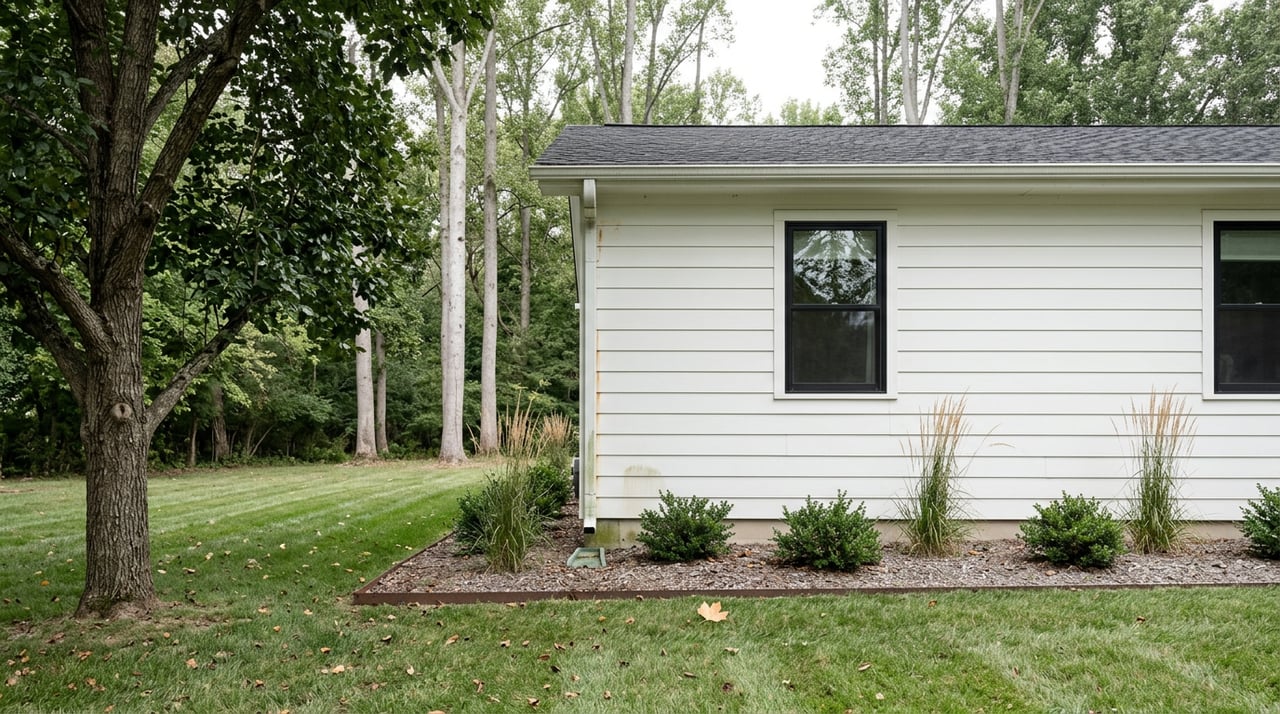
Picture a seller in Forest Hill this fall. The house is priced right, the yard is mowed, and the septic inspection came back clean two weeks before listing. Everything about the paperwork looks finished. Then, three weeks into the contract, the buyer's title company asks a question nobody on the seller's side thought to ask first: was the inspector who signed that report actually licensed under the state's new framework, or just certified the old way?
That question did not exist in Harford County real estate two years ago. It exists now, and it is going to catch sellers off guard through the rest of this year.
Here is the part most septic guides miss. Harford County has required a septic inspection before a home can change hands for years, under its own county ordinance, independent of anything Maryland requires statewide. What changed in 2026 is not whether an inspection happens. It is who Maryland now says is allowed to perform it, and that shift lands in the middle of an already brisk selling season.
Harford Already Had This Rule
Maryland has never had a blanket state law requiring a septic inspection at every home sale. Historically, the requirement lived at the county level, and Harford was one of a handful of jurisdictions, alongside Anne Arundel, Baltimore, Carroll, Frederick, and Queen Anne's counties, that put its own private sewage disposal ordinance on the books. In Harford, that ordinance is Chapter 216 of the county code, and it has governed how private septic systems are permitted, inspected, and maintained for more than two decades.
Practically, this means a Harford County seller with a well and septic system has never had the option of skipping an inspection the way a seller in a county without a local rule might have. The seller typically arranges and pays for it, the results go to the county, and a failing system has to be addressed before the sale closes. None of that is new for 2026.
What is new is the question of credentials.
What Actually Shifted in 2026
For years, the Maryland General Assembly fiscal note described the people performing these property transfer inspections in Maryland as operating under a certification system. A septic inspector paid a biennial fee, roughly $150, to keep practicing.
That changed with HB 146 and its cross-file SB 165, on-site wastewater legislation that moved through the 2026 Maryland General Assembly session. According to the bill's fiscal note, emergency regulations establishing licensing provisions for on-site wastewater property transfer inspectors took effect December 31, 2025, and were set to expire May 24, 2026, functioning as a bridge while the permanent licensing framework under Title 9, Subtitle 11A of the Environment Article caught up. The Maryland REALTORS' summary of the 2026 legislative session confirms the bill passed, requiring that homes served by septic systems be inspected and pumped as required before transfer, with settlement unable to proceed until both buyer and seller receive the inspection report and proof of pumping.
The Maryland General Assembly committee testimony says the statewide version of that closing contingency, the one that will eventually apply to ordinary home sales in every Maryland county, phases in over the next two years, with the general property sale requirement targeted for July 1, 2028. Landlords face that same 2028 deadline, with the added requirement that a system be re-inspected and pumped before each new tenant moves in. But Harford County sellers are not waiting on either of those dates, because the county's own inspection requirement has been in force all along. What they need to confirm right now is whether the person doing that already-mandatory inspection holds a credential that satisfies the newly created state standard, not the looser certification that was good enough before this year.
|
Before HB 146/SB 165 |
Current standard |
| Inspector credential |
Biennial certification fee, no formal license |
License required under Title 9, Subtitle 11A of the Environment Article |
| Oversight body |
No dedicated licensing board |
State licensing framework phased in via emergency regulation, then permanent statute |
| Harford County sale requirement |
County ordinance (Chapter 216) required inspection regardless of state law |
Same county requirement, now paired with a state credential standard for who performs it |
A seller who used the same inspector their neighbor used in 2023 has no guarantee that inspector transitioned cleanly into the new licensing structure. Asking the question before the report gets written costs nothing. Discovering the gap during underwriting costs time nobody selling a house this year has to spare.
The Well Question Buried in the Report
Septic gets the attention, but the inspection report almost always touches the well too, and Harford County's geology makes that section harder to read than it looks.
Per the Harford County Health Department's own guidance for building with a well and septic system, most wells drilled in the county are considered rock wells, drawing from fractures in bedrock, while wells drilled in the coastal plain, generally east of Interstate 95 toward the Bay, are considered sand wells. That distinction matters when a buyer sees a yield number on an inspection report and doesn't know what to make of it. A modest yield from a rock well west of I-95 can be entirely normal for that geology. The same number from a sand well closer to the water tells a different story. A buyer's agent unfamiliar with the county might flag a number that a local reading would recognize as unremarkable, or wave off a number that actually deserves a second look.
This is the kind of detail that rarely shows up in a national septic guide, because it depends entirely on which side of a specific interstate a specific well sits on.
The Season You Can't Argue With
If an inspection turns up a failing system, the next step is often a percolation test to size a replacement drainfield, and Harford County puts a real calendar constraint on when that can happen. About 20 percent of properties in the county sit on what the Health Department classifies as wet weather soils, and those parcels can only be perc tested between February 1 and April 30 each year.
A seller who gets a failing inspection in August is not looking at a quick fix. If the property falls into that wet weather category, the earliest a new perc test can happen is the following February, which pushes a repair, and the sale, well into the next selling season.
That timeline pressure lands harder given where the market has been trending into this year. Entering 2026, Harford County's median home price had held in the $400,000 to $425,000 range, with homes typically moving in 30 to 35 days across family communities like Bel Air, Forest Hill, and Abingdon. Inventory had grown compared to the tightest years of the recent cycle, giving buyers more room to negotiate and more patience to walk if a septic issue surfaces late. A seller who discovers a wet-weather-soil complication in the middle of a listing period isn't just facing a repair bill. They're facing a market where buyers have other options while the clock runs out on the calendar, not the contract.
Before You List
- Ask your septic inspector directly whether they are licensed under Title 9, Subtitle 11A of the Environment Article, not just certified under the older fee-based system.
- Request the well type noted in the inspection record, and ask what a typical yield looks like for that type in your part of the county.
- If your property has never had a documented soil classification, ask the Health Department whether you fall into the wet weather soil category before you list, not after an inspection fails.
- Keep pumping receipts and prior inspection reports on hand.
A Few Questions Worth Settling Early
Does this affect homes on public water and sewer? No. The county ordinance and the state licensing framework both apply specifically to private septic systems. A home connected to public sewer service in Harford County is not subject to this inspection requirement.
My septic was inspected two years ago. Is that good enough? It depends on who performed it and what the county and your buyer's lender will accept.
Who do I actually call in Harford County? The Bureau of Environmental Health at the Harford County Health Department handles septic inspections, well permitting, and perc test scheduling. None of this is legal advice, and any specific contract language should go through your title company or attorney.
Selling a home on well and septic in Harford County was never a simple checkbox, and 2026 added a credential question most sellers won't think to ask until someone else asks it for them. If you're preparing to list a property in Bel Air, Forest Hill, Abingdon, or anywhere else in the county running on private well and septic, The Limitless Group can walk through your specific inspection timeline before it becomes a closing delay. Get Your Free Home Valuation and let's map out what your property actually needs before it hits the market.